
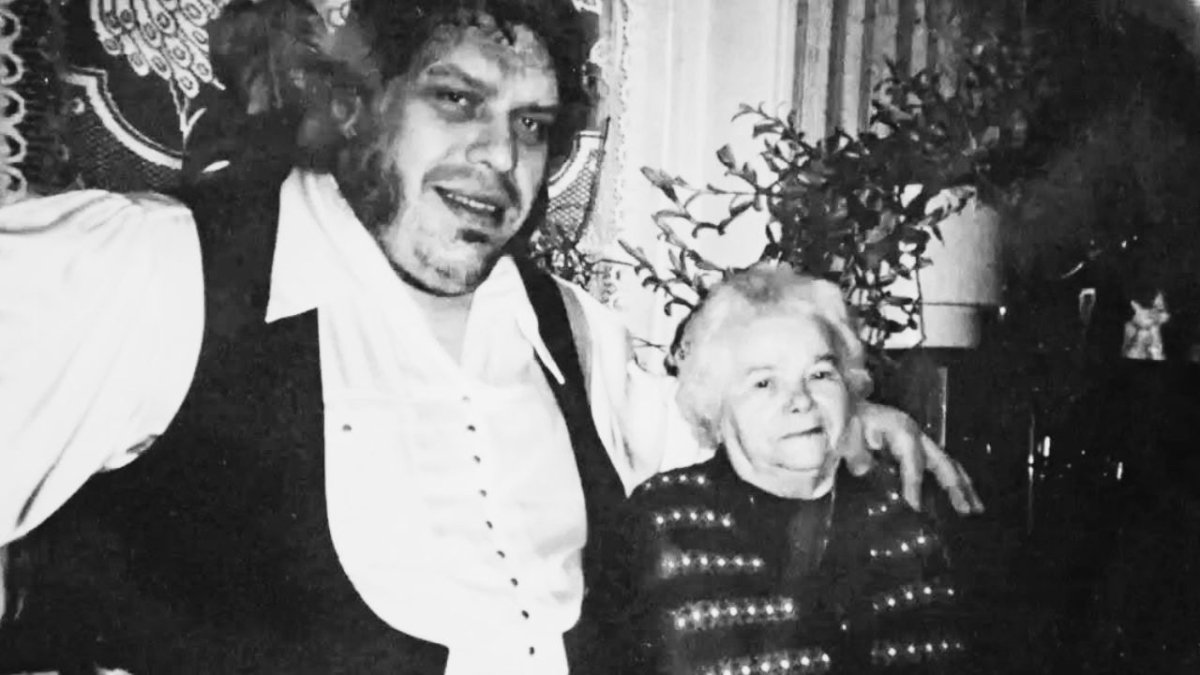
Most people who search for Boris Roussimouff end up in the same place — the story of his son. André the Giant is one of the most recognized names in professional wrestling history, and almost everything written about Boris exists because of that connection. Boris himself left almost no public record. He was a private man who worked the land and raised a family in rural France.
Yet his life matters. His origins, his immigration story, and the quiet environment he built for his children all shaped the early years of one of the most unusual figures in 20th-century popular culture. This article looks at what confirmed sources tell us about Boris Roussimouff — who he was, where he came from, and how he fits into André’s story.
Who Boris Roussimouff Was
Boris Roussimouff was the father of André René Roussimoff, professionally known as André the Giant. That single fact is the reason his name appears in genealogy databases, biography pages, and wrestling history articles at all. He was not a public figure in any other sense.
Readers may notice the name spelled several different ways across different sources. You’ll find Roussimouff, Roussimoff, and even Roussimoff Stoeff depending on where you look. This is common with Slavic surnames that were recorded across Bulgarian, French, and English administrative systems over many decades. Sources including MyHeritage, Geni, and multiple André the Giant biography pages all confirm the same core identity behind those spelling variations.
MyHeritage’s biographical records state it plainly: “Boris Roussimouff was the father of André the Giant.” English and German Wikipedia both name him as André’s father, using slightly different spelling variants but pointing to the same person.
Boris’s Origins in Bulgaria and His Move to France
Boris was born on 15 March 1907 in Ribaritsa, a village in the Teteven municipality of Lovech Province, Bulgaria. That detail comes from his Geni genealogy profile, which remains one of the more specific public records available for him.
At some point before 1938, Boris emigrated to France. The exact date of that move is not documented in available sources. What French biographical records do tell us is that he arrived as a laborer. One French source describes him as an ouvrier d’origine bulgare — a worker of Bulgarian origin. He was not a professional or academic. He came to work.
German Wikipedia identifies him as “Boris Roussimoff Stoeff,” described as a Bulgarian immigrant. A Royal Albert Hall catalogue entry referencing André notes the family’s Slavic heritage, placing Boris’s Bulgarian roots alongside his wife’s Polish background as a defining part of André’s ancestry.
His Marriage to Marianne and the Family They Built
Boris married Marianne Marasjeck (also spelled Maraszek), a Polish immigrant, in 1938. Marianne originally came from Korytnica, Poland. According to an article focused on André’s Polish roots, Boris met Marianne through her Polish relatives while both were working in France.
Together they had five children. André was the third, born on 19 May 1946 in Coulommiers, Seine-et-Marne, France. His siblings were Antoine, Hélène, Mauricette, and Jacques.
One important detail that multiple sources confirm: André’s parents and all four of his siblings were of average height and build. His gigantism, caused by a condition called acromegaly, was not a family trait. It was a medical condition unique to André. The official AndreTheGiant.com biography states directly that “his parents, Boris and Marian Roussimoff, and four siblings were of average size.”
Boris and Marianne’s union brought together Bulgarian and Polish roots in a rural French setting. That layered background — Slavic by heritage, French by daily life — is something multiple biographies mention when discussing André’s identity.
Life on the Farm in Rural France
The family settled in Molien, a small hamlet within the commune of Ussy-sur-Marne, in the Seine-et-Marne department of northern France. Boris worked as a farm laborer. French sources classify him as an ouvrier, and multiple biographies describe the family home as a small farm.
André grew up doing farm chores alongside his siblings. It was a modest, working-class upbringing in the French countryside — far removed from the arenas and television cameras that would later define André’s adult life. IMDb’s biographical notes for André mention he was born into a small farming community, reinforcing that picture of a quiet rural childhood.
There is a well-known anecdote connected to this period of Boris’s life. According to the Spanish Wikipedia entry on André Roussimoff, Irish playwright Samuel Beckett acquired land near a village outside Paris around 1953, and Boris had some involvement in that transaction. The story that followed — that Beckett would drive a young André to school in his truck — has been repeated in many forms across different biographies. It is worth treating this as a reported anecdote rather than a fully verified account, since versions differ across sources. What it does illustrate, in any form, is that Boris’s rural work and local connections placed his family in an environment where unexpected moments could unfold.
Boris in His Later Years
Public records about Boris’s later life are sparse. The Geni genealogy profile lists him as Boris Roussimoff (1907–1993), placing his death in France in 1993 at around 85 years of age.
André the Giant died in Paris in January 1993. Boris is reported to have passed away the same year. The timing is noted in several sources, though no mainstream English-language coverage of Boris’s own death appears to exist. He remained a private figure to the end.
There are no known interviews with Boris, no widely cited personal quotes, and no accounts of him attending André’s matches or public events. His life centered on work and family, and that is largely where the documented record stays.
Why Boris Roussimouff Still Gets Searched
People look up Boris for a few different reasons. Wrestling fans curious about André’s background often trace his story back through his parents. Genealogy users on platforms like MyHeritage or Geni may encounter his name while researching Slavic family lines. Others come across him in human-interest pieces about André’s mixed heritage or rural upbringing.
For anyone researching immigrant families in mid-20th-century France, Boris’s story fits a recognizable pattern. A man leaves one country, builds a life in another, raises children who carry traces of two homelands while belonging fully to a third. André became a French cultural figure with Bulgarian and Polish roots who later became a global star. That layered identity started with his parents.
Coverage of stories like this one can be found across a range of publishing outlets. Inside Business Mag covers profiles and background stories on figures connected to well-known public names, among other topics.
A Private Life Behind a Famous Name
Boris Roussimouff was, by all available evidence, an ordinary man. He was a Bulgarian immigrant who came to France to work, married a Polish woman, and raised five children on a small farm. He did not seek attention. He did not shape André’s wrestling career or manage his fame.
What he did provide was a foundation — a family home, a rural childhood, and a heritage that André carried with him through every chapter of his extraordinary life. That is enough to make Boris worth knowing about, even if almost everything written about him exists only because of his son.
The contrast between Boris’s quiet, low-profile existence and the worldwide recognition his son achieved is striking. He remains a background figure in one of sport and entertainment’s more remarkable stories — a farmer from Ribaritsa, Bulgaria, whose name now appears in genealogy databases and wrestling histories around the world.
Also Read: